
Concrete Removal Services in Peterborough: How Removal and Replacement Works
Updated · 6 min read · By Gilbert Brothers
In this guide
- What Does Concrete Removal and Replacement Involve?
- How Long Does a Concrete Driveway Replacement Take?
- Can New Concrete Be Poured Over an Existing Slab?
- Do You Need a Permit to Replace a Driveway in Peterborough?
- How Gilbert Bros Approaches Concrete Removal and Replacement
- Book Concrete Removal Services in Peterborough
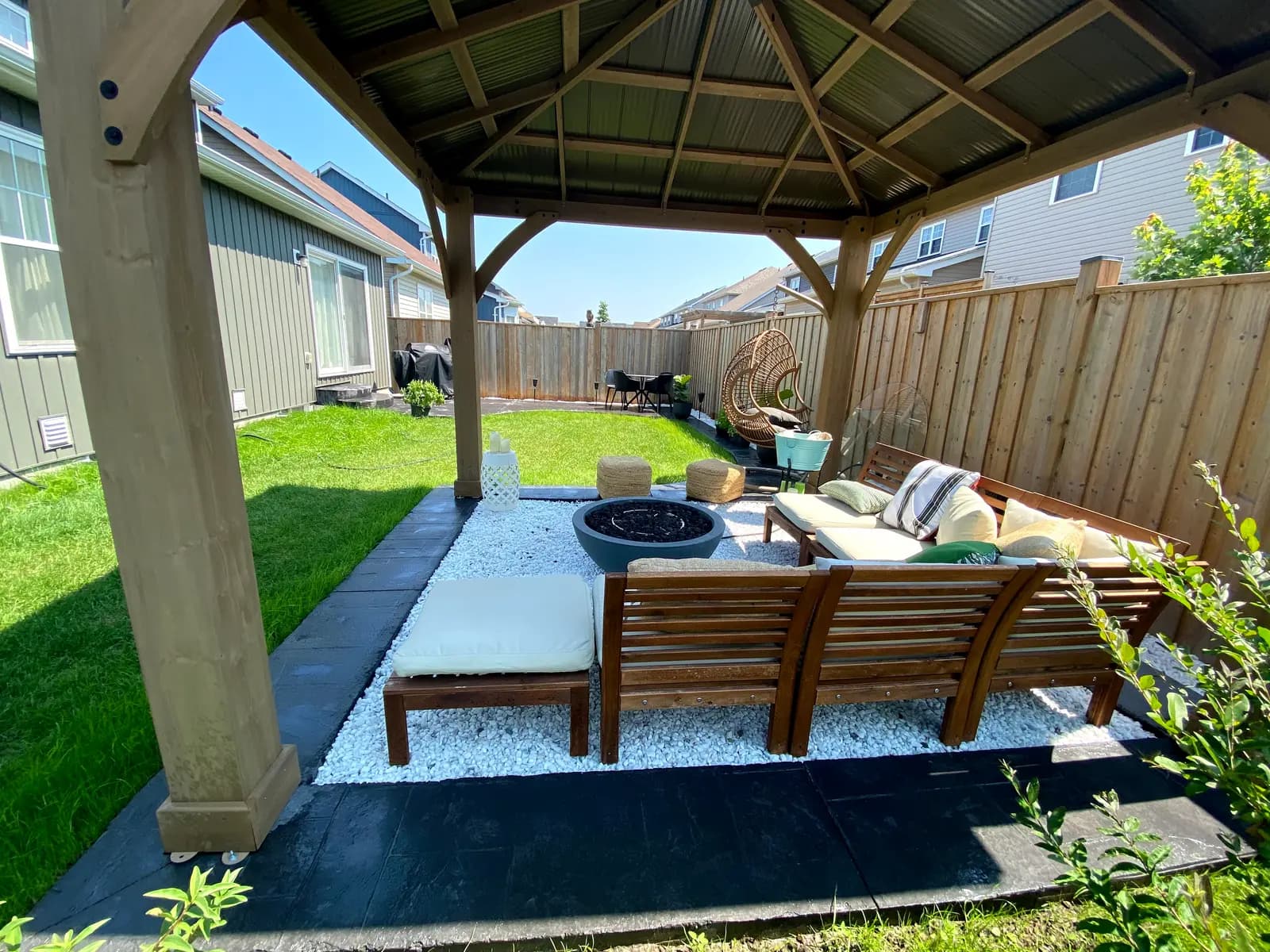
Concrete removal and replacement is a more predictable job than it looks from the driveway. We break out the old slab and haul it away, sort out the base underneath, set forms and steel, then pour the new surface. For an average-sized driveway, patio, or walkway that whole run is typically finished in a week or less, though how long any particular job takes really does come down to its size and complexity.
At Gilbert Brothers we pour new installs across Peterborough and the Kawarthas, and removal work sits right alongside that, though it tends to bring its own questions. People want to know how long they'll be without the use of the driveway, and whether the old slab can just be covered over instead of coming out. The other one that comes up a lot is where all that broken concrete actually goes.
August is a comfortable month for this kind of work. The ground is dry, and there's still a good stretch of pouring weather ahead of us. So here's the whole thing, start to finish.
What Does Concrete Removal and Replacement Involve?
There are four stages, and they run in the same order every time. Removal first, then the base underneath, then forms and steel, and the pour last. Nearly every decision on a job traces back to one of those four, so here's what each one actually involves.
- Breaking out the old concrete. We work inward from an edge with a breaker or a jackhammer, cracking the slab into pieces small enough to lift. Reinforced slabs take longer, since the mesh or rebar inside has to be cut free as the pieces come up. Size matters here. So does access, and a backyard you can't get equipment into changes the day considerably.
- Preparing the base. With the slab gone we can finally see the granular base underneath and judge what it needs. Low spots get filled, the grade gets reset so water runs the right way, then the whole bed is compacted. It's the least photogenic part of the job by some distance. It's also the part that most decides whether the new slab is still sitting flat after a decade of freeze and thaw, which strikes us as a fair trade.
- Forming and reinforcing. Forms go in next, set to the finished shape and elevation, and this is the moment the drainage slope gets locked in. Reinforcement follows. Where the new concrete meets a house foundation we drive rebar into the wall, which stops the slab drifting and keeps that slope where we put it.
- Pouring and finishing. The truck arrives, the concrete goes down, and we screed and float it level. From there it depends on the finish you've picked. A brushed surface gets finished and left to cure. A stamped one has to be coloured and stamped while the concrete is still workable, and that window isn't especially wide, so the stamping stretch of the day moves quickly.
Where does the old concrete go?
Broken-out concrete is recyclable, so it doesn't have to end up in landfill by default. Crushed down, it gets reused as granular fill and road base. If where the material ends up matters to you, that's a perfectly reasonable thing to bring up while you're collecting quotes, and any contractor should be able to tell you.
How Long Does a Concrete Driveway Replacement Take?
For an average-sized driveway, patio, or sidewalk, the on-site work is typically finished in a week or less. That's a guideline though, not a promise. Every project runs on its own size and complexity, and the only reliable answer for your driveway comes from someone standing in it.
Curing carries on well past the last day we're on site. Concrete keeps gaining strength for weeks after it's placed, long after the surface looks and feels finished to walk on, which is why foot traffic goes back first, vehicles later, and anything heavy later still. Exactly when each of those is safe depends on the pour and the conditions around it, so ask about it when you're getting your quote rather than guessing.
Weather gets a vote too. Concrete and steady rain don't mix, and pouring into the wrong conditions works against the cure, so a wet week can push a start date back. In August that's rarely much of an issue. Warm days and mild evenings are about as good as curing conditions get around here.
Can New Concrete Be Poured Over an Existing Slab?
Sometimes, and it depends almost entirely on what's already there. A bonded overlay means placing fresh concrete straight onto the old surface, and it can work nicely where the existing slab is sound, sitting flat, and not badly cracked. There's prep involved. The surface has to be mechanically roughened and treated with a bonding agent, and the new layer generally wants at least two inches of thickness to survive our freeze and thaw.
What tips the balance is that an overlay inherits whatever the slab underneath is doing. Where the original has settled, or has cracks that are still moving, those tend to telegraph up through the new layer inside a season or two. Full removal and replacement is the more dependable route there, mostly because it lets us correct the ground first, and the ground is the one thing an overlay can't reach.
Ask about it early, because the answer moves both the scope and the price. That one call shapes a lot of concrete replacement in Peterborough, and raising it up front will get you a clearer number from anyone you're talking to.
Do You Need a Permit to Replace a Driveway in Peterborough?
That comes down to what's changing. Repouring a driveway inside its existing footprint is a different situation from altering the entrance where the driveway meets the street, and it's the second one where municipal requirements are more likely to come into it.
Rules vary between municipalities and they do get updated, so the City of Peterborough is the place to confirm what applies to your property. Don't take a blog's word for it, ours included. If changing the entrance is part of what you're picturing, mention it early and it can be worked into the conversation from the start.
How Gilbert Bros Approaches Concrete Removal and Replacement
Evan and Dolan Gilbert startedGilbert Brothers Concrete Constructionin 2020, after years of concrete work with a local construction company, and we've worked as a concrete contractor in Peterborough and across the Kawarthas ever since. We're insured. Jobs range from residential developments right down to a single shed pad or a short run of walkway, and we're set up for both ends of that.
A few specifics hold on every pour we do.
- Four inches minimum on every slab, and six where the surface will carry heavier loads. Any change to thickness gets discussed and agreed before we start.
- Every pour gets 10 gauge wire mesh set into the concrete.
- Where new concrete meets a foundation wall, 10mm rebar goes into the wall to stop movement and hold the drainage slope.
- If you want more reinforcement than that, fiberglass or extra rebar can come in through our suppliers.
Replacement opens a door that a straight repair doesn't. You're pouring a fresh surface anyway, so the finish is entirely back on the table, and a driveway orpatiothat spent twenty years as plain grey can come back stamped in Ashlar Slate, Old Granite, Flagstone or Fieldstone, in earth tones like charcoal, sienna brown, terracotta or beige. That's a nicer decision than most renovation decisions get to be. Worth settling before the forms go in, though. Our concrete finishes page has the full range if you want a look, and theFAQgoes deeper on how we build.
Book Concrete Removal Services in Peterborough
Concrete replacement in Peterborough starts with a free quote. Tell us what you've got now and what you'd like in its place, and we'll get you a price. Send your details through our contact page and someone will be in touch within one business day, or just call us at (249) 387-1659. We're around Monday to Friday from 8am to 6pm, and weekends from 9am to 4pm.
From there you'll know what's coming out, what's going back in, and how the finished surface will look once the forms come off. That's enough to plan around on your own terms, whether you're going ahead this month or just penciling something in for next spring.